Monday, November 1, 2010

Maserati cars pics new620

The Maserati brothers, Alfieri Maserati, Bindo Maserati, Carlo Maserati, Ettore Maserati, Ernesto Maserati and Mario Maserati, were all involved with automobiles from the beginning of the 20th century. Alfieri, Bindo and Ernesto built 2-litre Grand Prix cars for Diatto. In 1926, Diatto suspended the production of race cars, leading to the creation of the first Maserati and the founding of the Maserati marque. One of the first Maseratis, driven by Alfieri, won the 1926 Targa Florio. Maserati began making race cars with 4, 6, 8 and 16 cylinders (actually two straight eights mounted parallel to one another.) Mario, an artist, is believed to have devised the company emblem: a trident. Alfieri Maserati died in 1932 but three other brothers, Bindo, Ernesto and Ettore, kept the firm going, building cars that won races.
In 1937 the remaining Maserati brothers sold their shares in the company to the Orsi family, who in 1940 relocated the company headquarters to their hometown of Modena, where it remains to this day. The brothers continued in engineering roles with the company, however. Racing successes continued, even against the giants of German racing, Auto Union and Mercedes. In 1940 a Maserati won the Indianapolis 500, a feat repeated the following year.
The war then intervened, Maserati abandoning cars to produce components for the Italian war effort. Once peace was restored, Maserati returned to making cars, the Maserati A6 series, doing well in the post-war racing scene. This was the last involvement of the Maserati brothers, who after the 10-year contract with Orsi, went on to form the O.S.C.A. car builder.
The famous Argentinian driver Juan-Manuel Fangio raced for Maserati for a number of years in the 1950s, producing a number of stunning victories including winning the world championship in 1957 in the Maserati 250F. Other racing projects in the 50s were the Maserati 200S, Maserati 300S, Maserati 350S, Maserati 450S, followed in 1961 by the famous Maserati Birdcage. Maserati had retired from factory racing participation due to the Guidizzolo accident (1957), though it built racing cars to be raced by others after that date.
After 1957, Maserati became more and more focussed on road cars, and chief engineer Giulio Alfieri built the 6-cylinder Maserati 3500 2+2 coupe featuring an aluminum body over Carrozzeria Touring's superleggera structure, a design also used for the small-volume V8-powered Maserati 5000. Next came the Maserati Sebring bodied by Vignale and launched in 1962, the Maserati Mistral Coupé (1963) and the Spider (1964), both designed by Pietro Frua, and their first four-door, the Maserati Quattroporte (1963), also designed by Pietro Frua. The two-seater Maserati Ghibli coupe was launched in 1967, followed by a convertible in 1969.
In 1968 came a great change - purchase by Citroën. Adolfo Orsi remained the nominal president, but Maserati changed a great deal. New models were launched, and built in much greater numbers than hitherto. Citroën borrowed Maserati expertise and engines for the Citroën SM and other vehicles, and Maseratis incorporated Citroën technology also, particularly in hydraulics.New models included the Maserati Bora, the first mass-produced mid-engined Maserati, in 1971, and the Maserati Merak and Maserati Khamsin soon afterwards, Maserati Quattroporte II which shared some parts with Citroën SM never came into production. The 1970s oil crises, however, put the brakes on this ambitious expansion - suddenly, the demand for fuel-thirsty sports cars shrank. Citroën went bankrupt in 1974 and on May 23, 1975, the new controlling group PSA Peugeot Citroën declared that Maserati also was in liquidation. Propped up by Italian government funds, the company stayed alive, if barely.1975 saw the company back on its feet with Alessandro de Tomaso, an Argentinian former racing driver, the new managing director. De Tomaso had arranged for the Benelli motorcycle company, which he controlled, to buy Maserati from Citroën and install him as its head. New models were introduced in 1976, including the Maserati Kyalami and the Maserati Quattroporte
Maserati cars
Maserati cars
Maserati cars
Maserati cars

Maserati cars

2011 Toyota Rav4 new863

-RAV4 restyled and re-equipped for 2010-Introduction of new entry point model with two-wheel drive-148 bhp speed automatic transmission newly available on XT-R grade-Toyota Optimal Drive delivers excellent balance of power, fuel economy and emissions performance across the zange-New contemporary urban front-end stylin-Leather and Alcantara upholstery and new 17-inch alloys for -HDD satellite navigation with music jukebox function standard on SR grade-Available to order now, official on-sale date 1 June-On-the-road prices from , the Toyota that inspired a whole new market segment for compact recreational SUVs, is proving the master of sustained success with a new-look 2010 model.As well as benefiting from new styling and higher equipment levels, the line-up has been revised to offer more choice, all with the performance, fuel efficiency and emissions rewards that come with Toyota Optimal Drive.The current diesel engine is featured in a new entry-point model in the range, with two-wheel drive and six-speed manual transmission. And, for the first time, the range-topping 148bhp unit is offered in XT-R trim, with six-speed automatic transmission. The 2.0-litre Valvematic petrol with Toyota’s Multidrive S CVT system remains part of the RAV4 portfolio, now exclusively in XT-R specification with all-wheel drive.
New exterior stylingThe 2010 RAV4 gains a strong new front-end design, anchored by a new, wider grille with horizontal blades and chrome accents, strengthening the model’s “contemporary urban” style appeal.The grille, a signature feature of the latest Toyota models such as Avensis and Verso, is framed by new-look headlights. These incorporate projector-type low beam lamps, integrated into the new bonnet and front wing design, emphasising RAV4’s wide track and dynamic appearance.There is also a new, full-width, aerodynamically styled front bumper which accentuates the vehicle’s stable stance. The addition of chrome accents to the grille, bonnet moulding and fog lamp surrounds reinforces the premium quality of the new design.Two new exterior colours have been added for the new 2010 RAV4: Deep Titanium metallic and White Pearl pearlescent.pecification upgradThere is an extra touch of luxury for the RAV4 XT-R AWD models with the introduction of a new leather and Alcantara upholstery combination as standard, together with heated front seats. In addition, both AWD and 2WD versions ride on new-design 17-inch alloy wheels.The RAV4 SR also benefits from an improved specification with Toyota’s hard disc drive (HDD) satellite navigation system now part of the standard package (previously it was an option). This sophisticated navigation technology, which is also optionally available on XT-R models, includes dedicated disc space for owners to set up their own on-board “jukebox” of their favourite audio files.These introductions build on what are already generous specifications. Highlights of the XT-R grade include cruise control, dual-zone climate control, automatic headlights and wipers, six-speaker sound system, Bluetooth, seven airbags, Hill-start Assist Control and rear privacy glass; versions add Intelligent All-wheel Drive and, with automatic and Multidrive S transmission, Downhill assist control
The , offered exclusively with the engine and six-speed automatic transmission, gains 18-inch dark-finish alloys, smoke-finish headlamps, a reversing camera, Smart Entry and Start and over-fenders.Toyota Optimal Drive powertrains powertrains benefit from Toyota Optimal Drive technologies to deliver an excellent balance of power, fuel economy and lower CO2 emissions. The table below demonstrates the advantage this gives the core model in the RAV4 range, the over some of its key compact SUV rivals.

2011 Toyota Rav4
2011 Toyota Rav4
2011 Toyota Rav4

2011 Toyota Rav4

Saturday, October 30, 2010

Heavy bikes:2010 pictures3

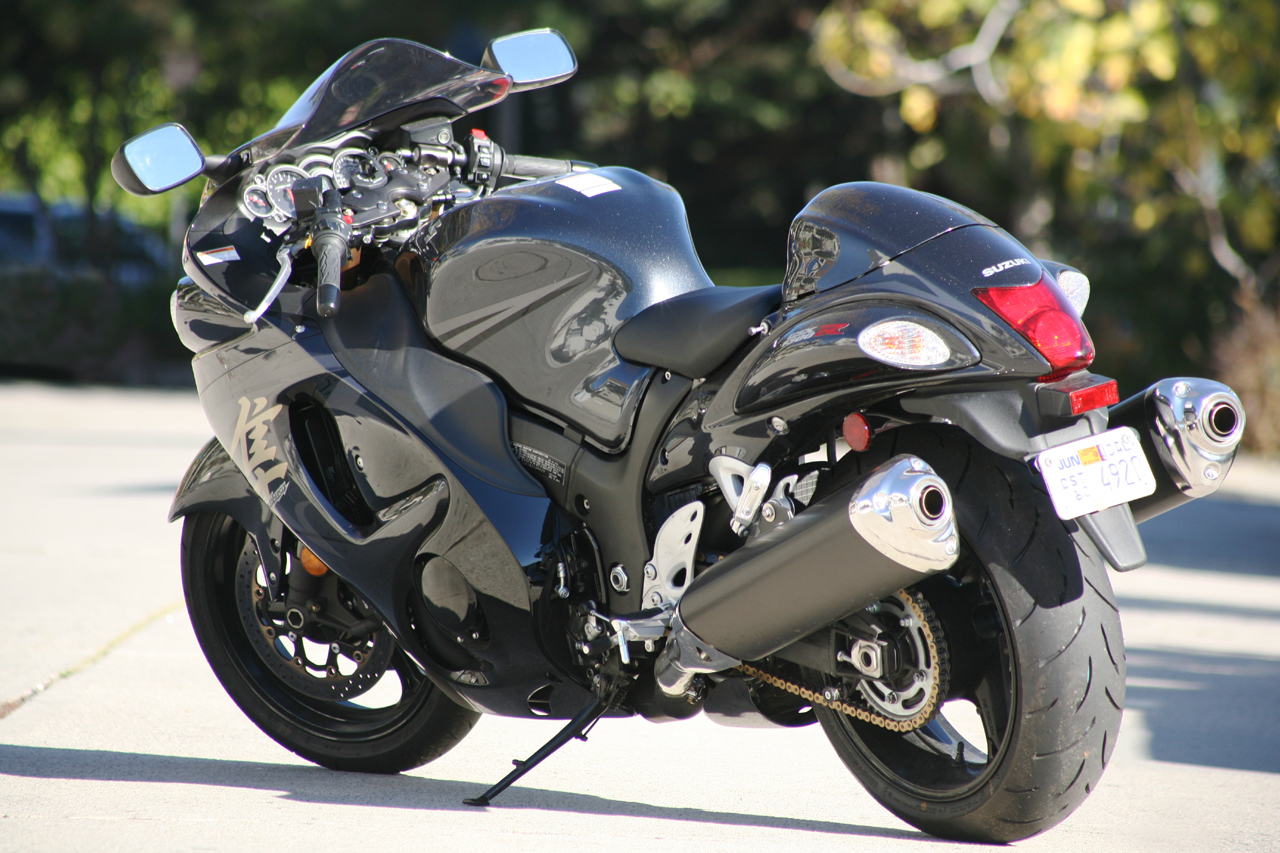
The first bike we ever tested, about 100 years ago, was the Suzuki V-Strom. It’s a great bike, with a wonderful engine, surprisingly good handling and looks only its mother could love. And now here we are testing the runt of the litter, the V-Strom 650. And what’s changed? At first glance very little. It’s still enormous, still as practical as ever and still as ugly as a drunken brawl. In fact, the only obvious difference between siblings is the single exhaust on the smaller bike and a slightly less leery colour scheme.Taking the 650 V-Strom home, then, was likely to be something of an anticlimax. Especially as over the last few weeks I had mainly been riding the GSX-R 1000 tested elsewhere. One extreme to the other, you might say. And you’d be dead right, of course. And completely wrong. Because, despite its bulk and relatively small engine, the 650 V-Strom is not a slow bike. Not by any means.That little motor, more commonly seen in everyone’s favourite first big bike the SV650, may only produce 66ps but it does it in style. I am pushed to remember the last time I rode a vee twin that revved this happily and I certainlycan’t think of one this small that went this well.Let’s look at the downsides, because there must be some. And there are. The SV650 is not, by any stretch of the imagination, a pretty bike. Understatement. It’s as ugly as sin. Happily, though, it is also nearly as much fun. The only other criticism I have is also aesthetic and purely down to my own taste and memory. If the term ‘plastic maggot’ means nothing to you then please feel free to skip this bit.
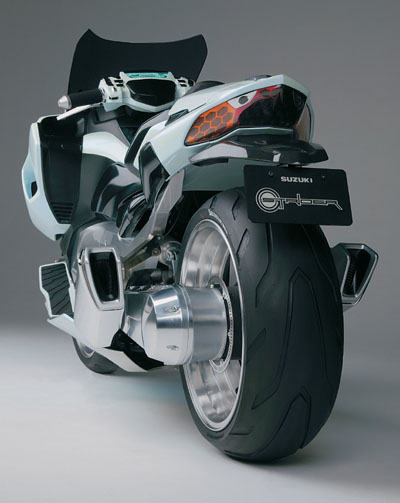
Electronics feature extensively in the Suzuki G-Strider's design, with electrically adjustable handlebars, windscreen, rider's seat, footrests, and backrests for both rider and passenger, enabling selection of the most comfortable seating position possible.
The Suzuki G-Strider also features an advanced telematics system which utilises a bidirectional wireless infrastructure to support videophone communication and Global Positioning System (GPS) navigation assistance.Heavy bikes:2010
Heavy bikes:2010
Heavy bikes:2010
Heavy bikes:2010
Heavy bikes:2010
Heavy bikes:2010

Friday, October 29, 2010

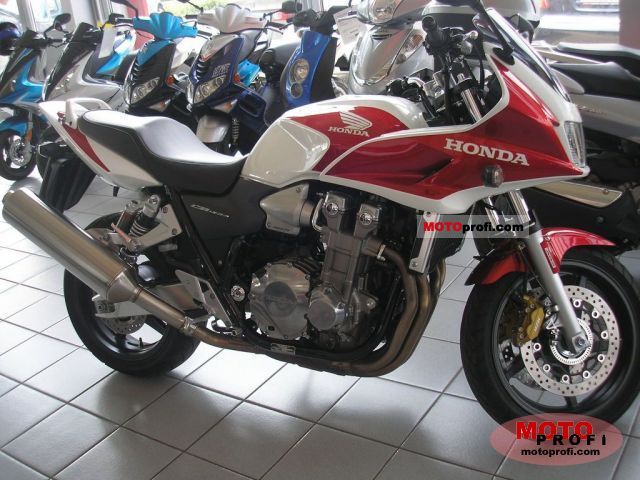
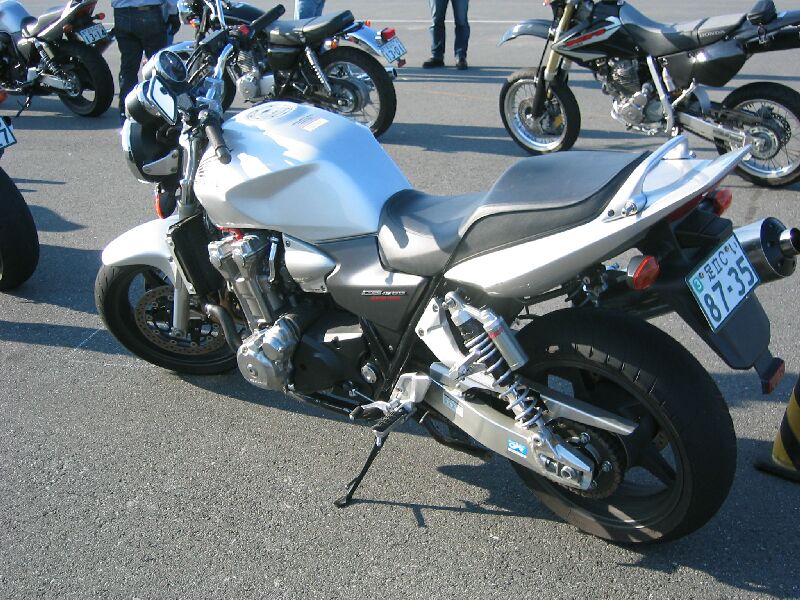
Heavy bikes cb1300 pics new

Certainly preload and rebound in the rear and probably preload in the front. Beyond this, who knows? I think any current large-bore sporting bike, retro or not, deserves USD forks, but Honda looks to be cost cutting in this department.It really depends on whether Honda pitches this as a $9495 improved Nighthawk or a $10,995 naked supersport. Do they want to compete with the Bonneville SE or the Monster?- MarEverybody thinks the Varadero is better than the V-Strom just because they can't get it. The Varadero is bigger, heavier, undersprung, and has less power. Not to mention the past cam chain issues. And as hard as it is to believe - its uglier. It is consistantly picked last in the comparisons done by BIKE magazine. Oh, wait a minute, Honda has updated it??? Six speeds! Fuel Injection! Revolutionary!!
This is exactly how Harley remained profitable for all those years, until they increased production.I don't think Honda WANTS to sell very many of the DN-01's. Seriously. I think it's a test mule for the new transmission. And I think they only want to sell enough of them to get a decent sized test fleet on the road (with the owners basically paying Honda to be beta testers) to work the kinks out of the tranny in advance of Honda's large scale deployment of that tranny in other bikes.Think about it. If Honda sold 50,000 of these things and it turns out to have a catastrophic tranny failure, their recall costs and potential tort liability would be much larger.
Heavy bikes cb1300
Heavy bikes cb1300
Heavy bikes cb1300

Heavy bikes cb1300

Heavy bikes cb1300

Piaggio MP3 500 pics63

more of a bridge vehicle for drivers of cars. The no-lean suspension on this groundbreaking three-wheeler already removed one barrier to entry for a vehicle you throw a leg over. Taking away the clutch and foot shifter removes another.I was riding the first prototype of the Spyder with the SE5, or sequential electronic five-speed, transmission. With the exception of the thumb-operated shifter under the left grip, this version of the Spyder is otherwise exactly the same as the original SM5, or sequential manual five-speed, version that came out last year.
Considering the prototype was the first of three iterations before the SE5 Spyder goes into production, it was already highly evolved and well-functioning. In place of the foot shifter and clutch, there's a little black button that I pushed forward to upshift. I didn't need to roll off the throttle as I shifted. I just pushed the button and the transmission smoothly kicked it up a notch without bucking me like a bronco as it attempted to mesh gears; the sensation was similar to the seamless, continuously variable transmission of a car.Downshifting, I had two options. I could push the button toward me, which required an act of finger contortion, or simply let the SE5 adjust to my slowing speed and downshift for me, which was my preference.
That made me wonder: Why didn't Can-Am just make the thing fully automatic on the upshift also? Mostly it was a matter of cost and efficiency. To make a fully automatic, CVT-type transmission would have required Can-Am to develop an entirely new transmission, instead of just modifying the one it was already using. That in turn would have upped the cost on the SE5 version, which already comes at a $1,500 premium.
Piaggio MP3 500
Piaggio MP3 500
Piaggio MP3 500
Piaggio MP3 500

Piaggio MP3 500

Premacy Hydrogen cars reviews2

Mazda Japan has started publicroad tests of the Mazda Premacy Hydrogen RE Hybrid, after only recently getting approval from Japans Ministry of Land Infrastructure and Transport (MLIT). After road tests are finished, Mazda plans to start commercial leasing of the hydrogen-powered hybrid MPV in Japan by the end of the 2008 financial year.
The Mazda Premacy Hydrogen RE Hybrid is powered by a Mazda Hydrogen Rotary engine that can run on either petrol or hydrogen, switchable via the push of a button. The hybrid rotary powertrain can produce 147 horsepower, about 40% more than the version of the engine in theMazda RX-8 Hydrogen RE. Driving using only hydrogen stored in the on-board 35 MPa high-pressure tank achieves a maximum range of 200km.View images of the PremacyHydrogen RE after the jump.Mazda's new test vehicle uses a series hybrid powertrain.
(Credit: Mazda)125 miles without using a drop of gas is not bad. The fuel efficiency has to figureinto the price of the car lease. I think hybrid and fuel efficiency vehicles really make a goodargumentforthevalueofleasing!http://monthlycarlease.com/2010/02/car-lease-offers-february-2010/T further its research into new powertrain technology, Mazda began leasing a series hybrid vehicle with a hydrogen-fueled range extending engine to energy companies and local governments. This type of test leasing helps automakers gain useful data on how cars operate in a controlled setting, and ensures that the vehicles' drivers have hydrogen filling stations available.
Although the powertrain configuration is similar to that of the Chevrolet Volt, a series hybrid using an electric motor to power the wheels and a range-extending engine to generate electricity, Mazda puts its own twist on the system, with a hydrogen-burning rotary engine as a range extender. Mazda previously developed an RX-8 using a rotary engine that burned hydrogen, calling it the RX-8 Hydrogen RE. BMW has also explored burning hydrogen in an internal combustion engine with the Hydrogen 7.Mazda's new vehicle is called the Premacy Hydrogen RE Hybrid, and is built on the five passenger Premacy platform. It has a 110 kilowatt motor to turn the wheels, which gets juice from a lithium ion battery pack. When the battery runs low, the rotary engine kicks in to generate electricity, drawing hydrogen from a 5,000 PSI tank. As configured, the Premacy Hydrogen RE Hybrid gets a range of 125 miles.
The car includes a dual fuel system, making it possible to use gasoline if no hydrogen is available.
Premacy Hydrogen cars

Premacy Hydrogen cars

suzuki pics62

Suzuki Ionis Hydrogen Concept VehicleThe Suzuki Ionis is a hydrogen concept minivan that made its first public appearance at the Tokyo Auto Show in October of 2005. Like several other concept cars displayed at the Tokyo show, the Suzuki Ionis mini-MPV (multi-purpose van) features hydrogen fuel cell technology. The car is shaped like a minivan, except in the front, where it is rounded. According to designers, it is supposed to look like flowing water, although some critics have said that the front of the car more closely resembles a fish head.Suzuki Ionis Hydrogen Concept Mini-MPDespite the fact that this car in neither available for purchase nor will be in production any time in the near future, this car shows exactly where car companies are headed with regards to overcoming the obstacles that exist in getting fuel cell technology to the mass market.The major advancement that has been made in the Suzuki Ionis is making the fuel cell itself much smaller and positioning it underneath the cabin floor. This means that the interior space in the car is much bigger. The Suzuki Ionis at only 134-inches long can seat four adults comfortably. It has four sliding doors to maximize access. In addition, and like other hydrogen fuel cell offerings, Suzuki has utilized LED lighting for its lighting system, giving both a futuristic appearance and big energy savings.Although the Suzuki Ionis hydrogen car is innovative for the glimpse it offers consumers at what they can expect in a fuel cell vehicle, there are many other innovative features that the Suzuki Ionis offers. For one thing, the LED system does not just make for an attractive dashboard as the same system is used in the DVD and entertainment center in the back seat of the car. Televisions in cars aren't really a new concept anymore, but they are in a car this size that is considered to be compact. You can also use the Internet in this hydrogen car, using a satellite link to the World Wide Web. Its possible to download music to play on your car stereo system and you can even watch satellite television in addition to any DVD's.Anther major advancement in the Suzuki Ionis is the use of by-wire technology, created by General Motors. By-wire technology allows all the functions that normally clutter up the area by the driver, such as the steering column and gearshift, to be controlled by the push of a button. Features that are controlled by by-wire include the brakes, the throttle, and steering. This frees up even more space in the car, allowing passengers to get the most room for the size of the car.The Suzuki Ionis is a hydrogen concept minivan that made its first public appearance at the Tokyo Auto Show in October of 2005. Like several other concept cars displayed at the Tokyo show, the Suzuki Ionis mini-MPV (multi-purpose van) features hydrogen fuel cell technology. The car is shaped like a minivan, except in the front, where it is rounded. According to designers, it is supposed to look like flowing water, although some critics have said that the front of the car more closely resembles a fish head.
suzuki
suzuki
suzuki
suzuki
suzuki

suzuki

Popular Posts

Related Posts Plugin for WordPress, Blogger...